People can survive hard work.
What they usually resent is hard work that feels unevenly assigned.
That is why scheduling fairness matters more than a lot of organizations admit. It is not only a morale issue. It is a trust issue.
What Physicians Actually Notice
Physicians rarely experience the schedule as an abstract system. They experience it as a series of sharp moments.
Another weekend. Another holiday. Another overnight stretch. Another month where someone else somehow escaped the bad assignments again.
Maybe the distribution is fair in the aggregate. Maybe it is not. What matters first is whether people can tell.
The Problem Gets Worse When The Logic Is Hidden
A scheduler can see the compromises behind the scenes. Everyone else usually cannot.
That creates a bad asymmetry. Each person feels their own inconvenience clearly and sees everyone else’s only dimly. If the schedule offers no way to inspect the distribution, people fill in the missing story themselves.
They usually infer favoritism before they infer complexity.
Fairness Is Not The Same Thing As A Rule
A lot of scheduling systems treat fairness as a few guardrails. No more than this many nights. No more than that many weekends. Rotate holidays.
Those rules matter, but they are not enough. A schedule can satisfy every guardrail and still feel lopsided over time. The hard assignments have texture. Back-to-back nights feel different from scattered nights. A holiday after a brutal week feels different from a holiday in a lighter stretch.
So the real problem is not just compliance with fairness rules. It is whether the schedule makes the burden feel shared.
Visibility Helps More Than People Expect
One reason fairness fights become so expensive is that nobody is looking at the same reality.
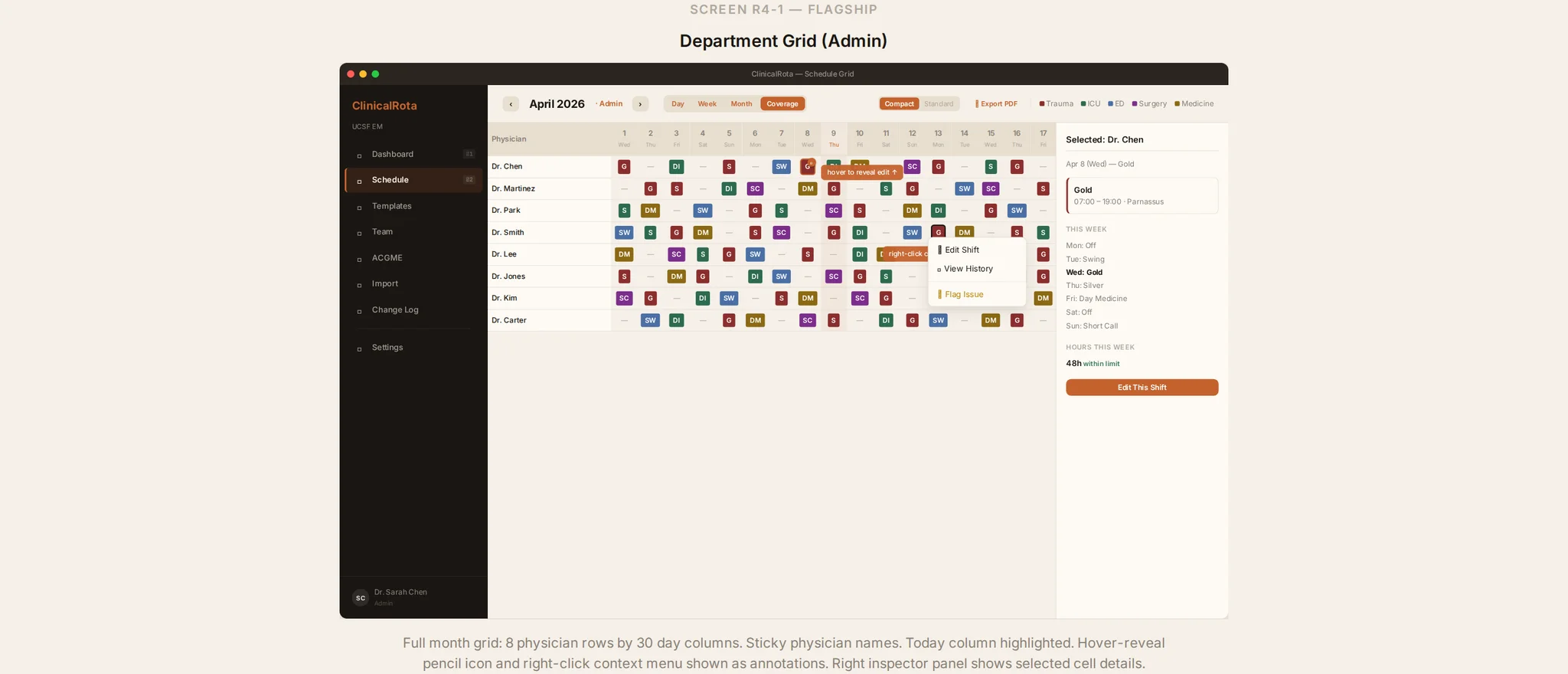
The moment you make the distribution visible, the argument changes. Sometimes the schedule really is unfair. Sometimes it is rough but balanced. In either case, the conversation improves because it is no longer pure speculation.
This is one reason I think better schedule viewing is underrated. People talk as if only the generation engine matters. Often the first improvement is simply making the existing schedule easier to inspect honestly.
What A Better Tool Would Do
A better scheduling product would do at least three things.
First, it would make the distribution visible across the group, not only one person at a time.
Second, it would remember history long enough to make fairness meaningful over time instead of only inside one month.
Third, it would let everyone see the tradeoffs behind the schedule without forcing the coordinator to explain them from scratch every cycle.
That would not solve burnout by itself. Nothing will. But it would remove one of the most avoidable sources of resentment.
If fairness is one of the reasons scheduling keeps turning political in your group, see the sneak peek. We will walk through the current direction, learn how your team actually makes these tradeoffs today, and decide what the first version should do.