Float pools are easy to describe badly.
People talk about them as if they were a backup pile of labor sitting on a shelf, ready to be inserted wherever the schedule breaks. In real hospitals, it is messier than that.
The Baseline Schedule Is Not The Whole Schedule
Hospitals like to imagine a normal staffing state. The core team covers the unit. The rules are known. The month is planned.
But hospitals do not operate at baseline for very long. Census moves. People call out. Vacancies linger. Leave requests cluster. That is where float pools, per diem staff, and agency coverage stop being a side issue and become the thing keeping the floor upright.
Coverage Is Not Interchangeability
The hard part is not only finding a body for the shift. It is knowing whether the person can safely cover it.
What orientation have they had? Which units do they actually know? Which credentials are current? Where have they already been stretched this week? What looks possible on paper but is risky in practice?
If that information is scattered across email, memory, and side spreadsheets, the hospital is depending on coordinator heroics again.
Cost Is Not The Only Risk
Float coverage is expensive, but the bigger problem is opacity.
When supplemental staff sit outside the main scheduling view, managers end up making decisions with a partial picture. The official schedule says one thing. The real schedule, including travelers, per diem coverage, and fragile assignments, says another.
That gap is where mistakes accumulate.
What Better Tooling Would Do
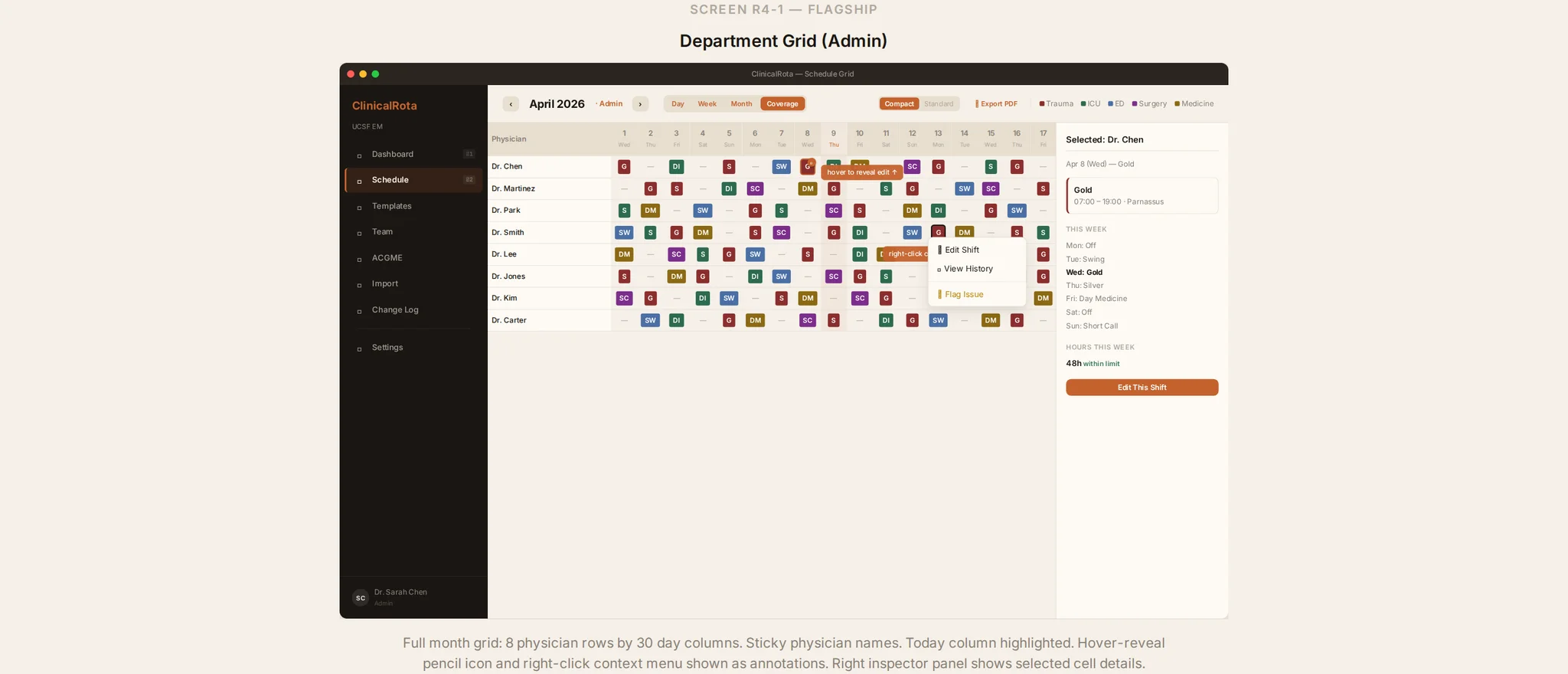
A better system would treat supplemental staffing as part of the real schedule, not a shadow schedule. It would show availability, familiarity, qualification, and recent placement history in the same operational view as the rest of the unit.
That would not eliminate staffing pressure. It would just stop hiding it.
If float coverage, per diem staffing, or agency coordination keeps living outside your main scheduling system, see the sneak peek. We will walk through the current direction, learn where the real scheduling picture is getting lost, and decide what the first version should do.